Followers

Showing posts with label neighbors. Show all posts

Wednesday, February 25, 2015

Sometimes a Tree is Just a Tree

You all know the old adage, "sometimes a cigar is just a cigar," not a you know, another thing.

Well, the same can be true with trees. Yes, often what is going on when neighbors get into bitter battles over trees and views, or trees dropping leaves and sticks in their pool, or trees casting shadows, or just being a pain in the tuchas, they really have an ax to grind over something more than that. The neighbor's kid beat out their kid for a slot on the soccer team; their house is bigger, more expensive, better situated, or their big car sticks into the neighbor's parking space.

Sometimes, they just don't like them, period, no reason. Too loud, too fat, too untidy, etc.

Trees are substantial. Trees you can sue over. And so people often do.

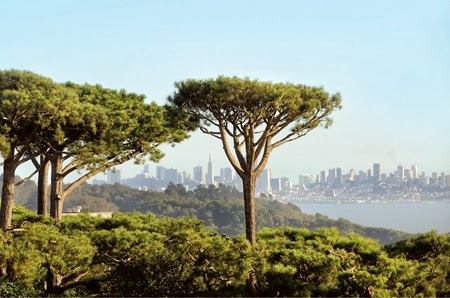
But sometimes a tree is just a tree and when two neighbors get into it over the trees, they are really fighting over trees. And views. a lot of times it's the view, the one the tree is blocking. The one you used to have, or are pretty sure you used to have of the Bay, the hills, the river. But now there is nothing to see but that big ugly tree.
But stop and think. Talk to the neighbor. Go to mediation. Try to reach a compromise before a dispute over a tree turns into a whole other kind of cigar. 


Tuesday, December 03, 2013

Tips for Homeowners Seeking Views

If you live in one of the communities with a tree and view ordinance or your ccr's define protected views, here are a few simple tips to insure you retain the views you had when you bought your property without getting into a lengthy, costly and acrimonious legal spat with your nighbor.

1. Document existing views. Take photographs when you move in of the views that you want to preserve, noting the location and height of trees that may become a problem in the future.

2. Meet your new neighbors and discuss with them your desire to maintain good relationships and good views, so that they can understand your interest in seeing their trees do not become too tall or bushy as they grow.

3. You may want to offer to share in tree maintenance costs from the beginning; after all, it is the investment in your property you are insuring, as well as a future cordial relationship with the neighbors.

4. Continue your photographic documentation of the trees as they grow (if they do), and discuss any potential problems as they arise.  Are the trees starting to encroach the on the view? If you've had success with 1-3, your neighbor is likely to be willing to trim the trees before they become a real issue between you.

5. Know the rules for your community or development, including the procedure for filing a claim, going to mediation or other dispute resolution methods recommended.

6. If you need to invoke the process, you will be armed with knowledge and with a paper trail of your efforts to preserve the view amicably.

7. And don't forget to try mediation first, before you go to court (most tree/view ordinances require you ask your neighbor to mediate before you may bring a lawsuit). If you do get to court, the judge is likely to send you to mediation anyway, so why not try first, agreeing to use a skilled mediator and even a mutually agreed upon neutral expert to advise you and the neighbor of how to remediate the problems to the satisfaction of both parties?


Monday, August 12, 2013

Homeowners can save time, money mediating tree, neighbor disputes

The problem:

You’ve noticed something has happened over the last few years.  Gradually, your neighbor’s trees have grown into the view you’ve enjoyed for the last decade. One day you realize you no longer have even the narrowest slice of the bay view you loved to watch as the sun set slowly and the sky reddened into beauty.

Is there anything you can do about this? If you live in one of Marin’s cities or towns with a tree and view ordinance (Belvedere, Tiburon, Sausalito, Corte Madera) the answer is yes. In these towns, a homeowner is entitled to restore the view he had when he came into possession of the property, if such restoration is reasonable.  In most cases you are no entitled to an unhindered view, but to a reasonable view.  The rights of the tree owners and the health of the trees are also taken into consideration when deciding these issues.

These ordinances also provide a method for homeowners to address disputes involving trees, views and, in some cases, sunlight. One such ordinance (in Sausalito) even provides a formal body that convenes to hear and advise on such disputes.

What to do about it:

 Here are the common steps tree and view ordinances prescribe:

 1.    Talk to your neighbor about the problem. If you believe and can document that your view of a scenic vista, bay, hills, even other trees, in the form of wooded landscape, has been impeded unreasonably by the growth of your neighbor’s trees, all the ordnances advise talking to the neighbor first. Try to work out a compromise. The neighbor may not have been aware of the growth of his tress, and if you agree to pay for the trimming, may welcome your offer.  This friendly neighbor scenario all too uncommon. Often other issues have come between the neighbors. The tree owning neighbor is defensive about his property rights. The neighbor with the lost view become indignant and talk is not an option.

2.    Mediation. All ordinances require that you next offer to mediate the dispute with a neutral party, one who can listen to both sides without judgment. The hope is the two sides can come to a reconciliation through a facilitator. It is at this juncture that things usually break down.  The cities and towns do not keep lists of skilled mediators, so neighbors are left to their own devices. In most cases, they simply choose to file suit.

3.    Tree Committee hearing or arbitration. Arbitration is another option, but if neighbors turn down mediation, binding arbitration is unlikely.  Sausalito is the only town with the Tree Committee. An aggrieved neighbor has the right to submit the grievance to the Tree Committee which will hold its own hearing. The neighbor complained against has the right to be present and to bring their own evidence or information to help the Committee come to a recommendation. 

If you choose not to attend, beware, since the recommendation of the Tree Committee, creates a “rebuttable presumption” in favor of the recommendation should the case land in a court of law.  That means if you are sued and your neighbor has a finding by a tree committee that your trees be trimmed, the burden of proof is essentially on you to prove they do not unreasonably block the neighbor’s view or that the neighbor never had a view since they owned the property.

Can things be improved:

Having been involved in many of these cases, I believe there may be ways to avoid a costly lawsuit and make homeowner feel better about finding an actual resolution to a vexing tree and view issue.

First, Cities and towns could keep lists of experienced mediators in tree and view disputes. This way, the homeowners could find names of those who have handled these cases before and have reached satisfactory results. When I called some municipalities to ask if they kept such a list, all I talked to said, no, they told people to use Google or the phone book.

Second, mediators could work with experts who would remain neutral and offer both sides the benefit of their expertise. This way, more homeowners would be likely to take advantage of the offer to mediate at the outset and not wait for a judge to send them to a mediator, once positions are hardened, lawyers have racked up expenses and experts are writing dueling reports.
This approach not only saves time and money for both homeowners, it has the potential of preserving the relationship between neighbors. And unless you plan to move anytime soon, keeping an amicable relationship with neighbors is all to the good. 

Tuesday, June 18, 2013

Mediate, Don't Litigate that Tree Issue

Got trees? Got views? Got neighbors you're feuding with? Who ya gonna call?

Specialized non-judicial tree, view, neighbor mediation with an experienced tree lawyer and expert neutral consulting arborist/tree risk assessor, that's who.

Save time, money, maybe even your neighborly relationship. Call us BEFORE you go to court.  We may be able to help resolve the thorny issues that arise between neighbors cost-effectively, without resorting to expensive legal proceedings. 

Try it. More info available. Write coastlaw@earthlink.net today. See our website.

Thursday, February 28, 2013

Try Mediation with a Neutral Expert

There’s a trend in the legal community toward collaborative law. This is most often seen in a family law setting, where two attorneys representing husband and wife try to work together to resolve the thorny issues of diving up property and arranging child custody and support.   Often, with the consent and input of both parties, a neutral financial or other professional will be brought in to assess the situation. This is different from what we think of as a normal lawsuit, where dueling attorneys hire experts to argue their side in court or even in mediation.

The two sides go in, and often come, out of the experience as bitter adversaries, both sure they have been treated unfairly. 


Collaborative law attempts to break this cycle of recrimination, mistrust and acrimony, by taking the clients through a process whereby they work together to solve the most pressing issues facing them, with the help of the neutral expert, weighing the benefits of all options.  When this approach works, it can save money, time and the emotional well-being for all concerned.


Applying this approach to Mediation:


In circumstances where two neighbors are at an impasse over one of the neighbor’s trees, boundary lines, easements or similar issues,  a similar approach can be used in mediating the dispute.  The two parties would agree to mediate the case with an attorney or community mediator and the use of a neutral evaluator of the case, for instance, a licensed property surveyor or consulting arborist trained in evaluating the health or hazard potential of trees.  Rather than each party hiring an attorney and their own experts, they agree to submit to an experienced expert’s advice in their particular situation.


As with any mediation, everything said is confidential and the parties are free to hire attorneys and go to court, if they cannot resolve their differences.  They will, however, have a much clearer idea of what the outcome is likely to be after having gone through mediation with a neutral professional evaluating the matter from a detached, scientific point of view.


Here is what one lawyer said about the use of neutral experts in mediation:


The expert is jointly hired by both sides and the cost is shared equally by both sides. The expert’s role is to openly provide independent, neutral expert information and analysis to both side and more so, to the process as a whole. The non-aligned expert becomes a mutual asset and a resource for all parties in developing options for settlement.


Shared costs. Shared usage. Heightened value. The joint use of a neutral, independent expert is a beautiful thing: The client pays less money and gets more value. And the experts find it liberating and freeing, allowing them to do their best work. (Michael Zeytoonian, http://www.disputeresolutioncounsel.com/2009/06/using-neutral-experts-in-mediation/#more-81)

Getting your neighbor to agree to mediation:


Consider taking your neighbor dispute to mediation and share the cost of having an attorney-mediator and neutral expert serve you, and help resolve your issues and keep peace in the block. You will need to initiate contact with the neighbor and try to overcome whatever hostility may have already developed that has brought you to an impasse. 


You need to explain that you would rather not have to engage the services of a lawyer and hire an expert to represent your views, but that  if you can’t resolve the differences, you may be forced to do so.  If you end up in court, the judge is most likely to send you to mediation anyway.  In the meantime, both parties will have spent hundreds, possibly thousands just to be back at square one. 


Then offer mediation with a skilled, experienced neutral expert who can evaluate the problem and recommend a mutually beneficial course of action or at least let both sides understand their options and likelihood of prevailing at trial should it go that far.  The two of you can jointly choose the neutral you feel most comfortable with. Lists can often be found at your local bar association or you can look online, use the yellow pages or ask for referrals from others.


Try mediation first. You have nothing to lose and you may find that you can settle your differences and maintain a neighborly relationship in the bargain.


Wednesday, December 26, 2012

"When a Tree Falls, We Hear it"

I hope everyone had a cool Yule and will have a green New Year.  Keep your trees fresh and avoid fights with the neighbors, if you can.  Trees blocking views?  Views threatening trees?  Wayward limbs getting dangerously close to the fence and backyard?  Don't litigate, Mediate. 

Tree Dispute Mediation is here for you.  Complete with an attorney mediator and expert neutral consulting arborist/tree hazard specialist.  Save time, money and your relationships with the neighbors.  Try mediation first.

Our motto since 2012:  "When a tree falls, we hear it."

What are you waiting for?
Green Legal Solutions 
and Tree Dispute Mediation
email us for more information: coastlaw@earthlink.net


Thursday, March 10, 2011

Most popular questions for the Blog

Check out the section of this Blog on easements. It gets more questions from readers than any other, than all the others put together for that matter. What's up with that? Lots of landlocked people out there. Lots of neighbors don't want to share. Tell us your story. And check our Facebook page and like us: Green Legal Solutions

Tuesday, October 17, 2006

More on the Baffling Boundary Trees

or LOOK BEFORE YOU LOP!

A commenter writes that a tree overhanging her dock was causing a concern it might fall and damage the dock. She had trimmed overhanging branches before, and the neighbor had never complainted. So she thought since the tree leaned her way, if was ok to cut it down.

Whoops! The neighbor has now taken her to Small Claims court, where the damage limit is up to $7500.

What should she do? She thinks the trunk might actually have been on the property line; if so, she may be liable for only half the value of the tree, since she would be responsible for half its upkeep. If it was truly in danger of falling and causing damage, its value would be lower and its hazard potenial higher. Too bad she didn't have it assessed by a consulting arborist before taking matters into her own hands.

Nevertheless, it is not too late for her to get expert advise. She can still have a consulting arborist assess the situation. Does she have photos of the tree before she cut it down? Is there any wood left that can be evaluated for disease or other stressers that may have devalued the tree?

Another step may be to have a survey done to determine if it was truly on the property line. All of these things can be costly however, so she may want to negotiate with the neighbor over the value of the tree and cost to replace with one that won't overhang her dock.

The moral of this story might be summed up as "Look before you Lop." In the long run, you can save time, money and your relationship with your neighbor if you get all the facts and are willing to work things out first.