Tonight, Thursday, Sept. 22, 9 PM, PDT, for those of you in the San Francisco Bay Area (and sometimes the signal goes north to Seattle, south to LA) I will be on the Peter B. Collins show with hubby, "Tree Detective," Ray Moritz, to discuss what can go wrong with your trees, what damage can be done to them, and what you can do about it.
Tune in and call in with your questions. 810 on your AM dial. Or listen at http://www.kgoam810.com/article.asp?id=2101434

A newsletter on land use, tree law, property and boundary issues and general environmental topics. What's new in CEQA, neighbor law and beyond.
Thursday, September 22, 2011


Sunday, August 21, 2011
Who ya gonna call when you got tree problems? Call the Tree Detective!

Here's an article about my husband, consulting arborist, fire ecologist, certified tree hazard assessor and urban forester, Ray Moritz. Got tree issues? He's the one for you. Got neighbor issues too? We work together on Tree Dispute Mediation.
Check it out.
Arborist Ray Moritz sees the forest for the trees 

Check it out.
Arborist Ray Moritz sees the forest for the trees
Wednesday, August 17, 2011
Ray Moritz grew up in a prairie town in Illinois. He always loved trees, and in the second grade he took an aptitude test that concluded, "You should be a forester."
"I ignored that all the way through the first portion of college," Moritz says. "I wanted to go into biopsychology - the study of brain function. But then I started doing docent work at an arboretum on weekends and I thought, 'Wait a minute, this is what I want to do.' "
Moritz, 67, hasn't looked back. An arborist specializing in fire-prevention assessment and urban forestry consultation, he alternately calls himself a tree detective, a tree whisperer and a forensic forester. He's worked 36 years in his field
"I love what I do," Moritz says in the San Rafael office of his consulting firm, Urban Forestry Associates. "I can't imagine doing anything in retirement I would prefer to this. They'll have to carry me out of the woods feet first."
Fifty percent of his work is private consultation: advising homeowners on which trees to plant, how to treat diseased or pest-ridden trees, when trees should be left alone and when they're a safety hazard and need to be felled.
Another 25 percent of Moritz's work is fire-management consultation and the remaining 25 percent is forensics: investigating cases where someone poisons a neighbor's tree, for example, or determining how a tree or its limb crashed onto a person, house or car and who, if anyone, is at fault. He's often hired as an expert witness on tree-related disputes at civil trials.
Poisoning a neighbor's tree? Moritz says it happens all the time, "simply because they find the tree a nuisance. You'll hear people say, 'I don't like trees because they're dirty.' In most cases they are people who grew up in highly urbanized areas, then moved to the country and aren't used to having leaves and twigs around."
From 2004 to 2009, Moritz wrote a twice-monthly column, Ask the Arborist, for The Chronicle. "It was a lot of fun, but after each column, I would come into the office with great dread because when I opened my e-mail, there would be a lot of questions about trees. It was consuming a big portion of my time, and people would get upset if I didn't answer them."
The passion felt for our trees can lead to bad decisions. "Trees have great psychological meaning to people," Moritz says, "and one of the commonly mistaken notions is that trees are eternal. There are some trees that are awfully long-lived and, generally speaking, trees have longer life expectancies than people. But there are many trees that don't."
In the Bay Area, "there was a lot of grazing land when people first settled here. They wanted trees for shade and enjoyment and they wanted them fast. So they went out and got what I call the 'punk rockers' of the tree world: eucalyptus, Monterey pine, Monterey cypress, poplars. The live-fast, die-young, be-a-beautiful-corpse trees."
The people who planted those trees in the early 20th century are long deceased, Moritz says, "and the current homeowners and cities are dealing with the decay and decline of those trees. In the past two years, I've had more wrongful-death cases caused by tree failures than in my entire prior career of over 30 years."
Moritz says that people get attached to trees, they dread their loss, and that when a tree is gone, they mourn it like a beloved friend. "When the tree has to go altogether, when I've made a hazard assessment and I recommend immediate removal, some people are reluctant and don't remove it. I make it clear to them that, once I have notified them of this high risk of failure, their liability changes should that tree damage someone else or their property."
Usually, people respond to an imminent hazard. "Yesterday, a homeowner noticed some cracks in the soils around a couple of Monterey pines. While the trees were not a particular threat to her house, they were on a steep slope, and they actually targeted her neighbor's house across the street.
"So I went out there and probed the soils and realized that the root plate of the tree was lifting up. That tree was essentially in the process of failure. I believe that tree is being taken out today."
3 simple rules
"Trees got along fine for millennia before there were arborists," says Ray Moritz. Although special care is needed in urban settings with the stresses of pavement, home construction and pollutants, he says that in general "there's much more work done on trees than necessary." Here are his three simple mistakes to avoid:
1. Don't overwater: The most common problem I encounter when I inspect trees is excessive irrigation - which is surprising in Marin County, where water costs practically as much as Chardonnay. The symptoms on a tree of inadequate water are very similar to the symptoms of too much water. So, people see a tree starting to die back, the leaves changing color and browning, and they'll think, "It needs more water." They put more water on it and the tree declines that much faster.
2. Don't overspray: Trees are well adapted to most native pathogens and insects. And those pests have natural enemies - typically other insects - that maintain a balance in the forest. If you consistently and abundantly use broad-spectrum pesticides, spraying the whole canopy repeatedly, you kill off the predators. You're actually making the problem worse.
3. Don't top your trees: Topping takes out the physiologically most productive portion of the canopy. You can reduce the extent and height of the canopy through crown reduction, where you take a branch back to a secondary branch that can ultimately take over as the leader. But, if you cut that branch off arbitrarily, it produces sprout growth. As the sprouts get large, becoming branches, they're easily torn away from the tree by wind or simply fail under their own weight.
Thursday, August 18, 2011
More on Tree Mediation
Property Issues Crop up in Many Different Venues
If you are a lawyer reading this, know that at some time in your legal career, you will come up against property questions. Maybe you are administering an estate and need to determine the true boundaries of the real property. Is there an easement for ingress and egress that appears to be abandoned, but creates a cloud on the title because it’s still there in the deed documents?
Does the neighbor have a menacing looking row of Eucalyptus trees leaning toward your client’s house? Has a fire turned the property into rubble and you’re not sure who is to blame?
Even the most simple personal injury case involving the classic failure to yield collision may have some property management implications. Was the yield sign or line of sight obscured because the adjacent property owner failed to maintain a hedge in reasonable condition?
Did Caltrans let those median pittosporums get too scraggly for proper driving conditions?
All these and more can require expert opinions and evaluations beyond the standard accident recreations or investigations you deal with every day.
There are a number of tree experts who testify on these issues, including forensic foresters, fire ecologists, consulting arborists and others. There are surveyors and land engineers who can help bolster your case. When power line clearances are at issue, or trees improperly trimmed by power company crews cause major fires, liability fingers can be pointed all around; and will be.
Tree Dispute Mediation:
The most frequent issue that arises in my practice is Tree versus View. In towns with prized views of the Bay, these disputes are frequent and often nasty. Neighbor is pitted against neighbor. Sometimes drastic action is taken by one neighbor to retain or obtain a view. I have known people to do midnight tree topping or poison their neighbor’s trees and plants while maintaining righteous indignation that those pesky trees had the nerve to grow into their expansive (and expensive) view.
I have seen people defend the rights of looming eucalyptus, scruffy Monterey pines and scraggly acacias to grow as high as they like, ignoring polite offerings to trim the trees or mediate.
Both sides will say “I don't care how much it costs. It’s the principle of the thing!" when given an estimate of the cost for legal wrangling, including experts, court fees, attorney and mediator fees.
There are no winners in these pitched battles. Neighbors become embittered toward one another no matter the outcome. No amount of money can compensate for the loss of trees, the privacy and screening they provide, shade and shelter, and just plain beauty. On the other hand, messy foliage blocking your view of the Bay may serve no other function then to annoy the viewer. Most often, these disputes build over time until one side cannot take it anymore and fireworks ensue.
Stop the Cycle
How to stop the cycle? Some towns have Tree Committees, made up of volunteers, who will hear disputes and offer advisory opinions. Unfortunately, these citizen boards are composed of lay people, often with little or no understanding of botany or appreciation for the amenities the right trees can provide. Seldom do the disputes end amicably.
And neighbors hesitate to mediate their problems, fearing yet another round of “let’s make a deal” when all they want is what they see to be their rights: “My property, my trees.” “My property, my view.”
Something New - Mediation with a Twist
Twenty years of these same arguments and counterarguments have prompted me to try something new. Our firm, Green Legal Solutions, now offers mediation with a twist. We have teamed up with a consulting arborist and certified hazard tree assessor to act as neutral in mediation on tree issues. Will it work? Only if people are willing to listen to a “scientific” assessment of the problem. If they do, and if they can suspend their own personal animosity, maybe, just maybe, they can find the right compromise that will work. Otherwise, they will be back to hiring their own dueling arborists, go to more mediation and settlement conferences, maybe even to trial, to achieve something that is likely to look very much like what they could have achieved for far less in money, time and aggravation.
Tree Dispute Mediation: Try it in your next tree case.
Thursday, August 11, 2011
City Blinks First on Albert Park Pro Ball Issue
The City of San Rafael has been poised to approve a controversial proposal to bring pro baseball to the community's Albert Park field located adjacent to the densely populated Gerstle Park neighborhood. Currently, the ballfield hosts many youth and adult baseball teams throughout Marin and the Bay Area, a number of whom will be displaced by a pro team's use of the field. The proposal by Centerfield Partners (CP), of Dublin, California, would essentially allow the private for-profit company free rein with the public park, including doubling the seating capacity, using the park for at least 15 weekends from late May through early Autumn. Residents in Gerstle Park and the Southern Heights neighborhood have raised concerns over parking, traffic congestion on local streets and increased noise reverberating up to hillside dwellers.
Amplified music, concession stands in park open space and a grove of redwood trees and the sale of alcohol, have added to the residents' complaints, forcing them to hire attorneys, take up petitions and form an association, dedicated to pressuring the Council to perform necessary environmental review.
The association, Communities for Albert Park (CAP), has won the first skirmish in what may be a protracted baseball war. Previously the Council as well as the parks and Rec Department had insisted the project was exempt from review under California's Environmental Quality Act (CEQA).
After repeated hearings, letters and testimony from attorneys retained by CAP, including land use attorney Dotty LeMieux, whose office is in Gerstle Park, the City grudgingly agreed to perform the first step in CEQA review, the preparation of an Initial Study, which will be used to determine whether a full Environmental Impact Report (EIR), or a less detailed Mitigated Negative Declaration of environmental Impact (Neg. Dec.) is required.
At least the subcommittee made up of Council member Damon Connolly and Mayor Al Boro so agreed. The full Council will vote on Monday night whether to take this step. It should have come months ago. But it is a step in the right direction, and CAP applauds the City for relenting (though the City maintains it is not required, and agreed to it only after CP, realizing it was bucking a strong and well organized community group, whose good will they need to succeed, agreed to fund the study).
This study will not answer all the community's questions and may well raise more, but as Attorney Dotty LeMieux said, "We are grateful to the Mayor for realizing this the the right thing to do for the City and for the environment." She added, "We will however, be sure to make our wished known for what the Initial Study should look at in order to assure the best information is provided and the City doesn't simply use a cookie cutter checklist to justify not doing a full environmental review for this major change in use of a popular public facility."
Amplified music, concession stands in park open space and a grove of redwood trees and the sale of alcohol, have added to the residents' complaints, forcing them to hire attorneys, take up petitions and form an association, dedicated to pressuring the Council to perform necessary environmental review.
The association, Communities for Albert Park (CAP), has won the first skirmish in what may be a protracted baseball war. Previously the Council as well as the parks and Rec Department had insisted the project was exempt from review under California's Environmental Quality Act (CEQA).
After repeated hearings, letters and testimony from attorneys retained by CAP, including land use attorney Dotty LeMieux, whose office is in Gerstle Park, the City grudgingly agreed to perform the first step in CEQA review, the preparation of an Initial Study, which will be used to determine whether a full Environmental Impact Report (EIR), or a less detailed Mitigated Negative Declaration of environmental Impact (Neg. Dec.) is required.
At least the subcommittee made up of Council member Damon Connolly and Mayor Al Boro so agreed. The full Council will vote on Monday night whether to take this step. It should have come months ago. But it is a step in the right direction, and CAP applauds the City for relenting (though the City maintains it is not required, and agreed to it only after CP, realizing it was bucking a strong and well organized community group, whose good will they need to succeed, agreed to fund the study).
This study will not answer all the community's questions and may well raise more, but as Attorney Dotty LeMieux said, "We are grateful to the Mayor for realizing this the the right thing to do for the City and for the environment." She added, "We will however, be sure to make our wished known for what the Initial Study should look at in order to assure the best information is provided and the City doesn't simply use a cookie cutter checklist to justify not doing a full environmental review for this major change in use of a popular public facility."
Thursday, July 21, 2011
More on Privatization of Albert Park
Article in IJ gives just a snapshot of the hearing at the City Council Monday night. We learned that this business entity, Centerfield Partners, wants to open 4 Bay Area pro ball teams, and that the City will be subsidizing this one to the tune of at least $25,000. No benefits to the City or business were outlined, save a feel good appeal to civic pride and kids' (and grown ups) desire to watch baseball. Many of these minor league ball teams have failed and take local businesses with them.
Why not set up a local non-profit Friends of Albert Park instead? Raise money the old fashioned way and keep our local teams playing in San Rafael.
Article below. I am helping the local citizens who want real environmental and fiscal review before approval:
San Rafael council delays Albert Park pro baseball decision
Why not set up a local non-profit Friends of Albert Park instead? Raise money the old fashioned way and keep our local teams playing in San Rafael.
Article below. I am helping the local citizens who want real environmental and fiscal review before approval:
San Rafael council delays Albert Park pro baseball decision
Posted: 07/19/2011 09:40:08 AM PDT
Click photo to enlarge
The Marin Academy High School varsity baseball team warms up before their game against Drew High...
After more than three hours of public comment and presentations — and one near-scuffle, the San Rafael City Council put off voting on a plan to bring professional baseball to Albert Park.
The council opted to delay weighing in on the proposal from Centerfield Partnership to start a new North American League team in San Rafael shortly after midnight, citing the late hour and still unanswered questions.
"In light of the hour, I don't think it would be very prudent to continue," Mayor Al Boro said. Boro noted that he and Councilman Damon Connolly would work as a sub-committee with city employees to bring the issue back in two to four weeks.
"What I'd really like to see happen is to see Centerfield Partnership meet with some of the neighbors" before that meeting, Councilman Greg Brockbank added.
During the at-times tense meeting, audience members cheered, hissed and booed during employee and applicant presentations and public comment. Two men on opposite sides of the issue appeared to be on the verge of a fist fight at one point, with one exclaiming "Let's go" and then alerting police officers in the building lobby about the "knucklehead" inside.
However, everything ended peacefully, and most of the approximately 300 people who packed the chambers and a seating area in the building's lobby listened and spoke calmly despite the crowd.
Under the proposal, Centerfield Partnership would lease the lighted baseball diamond,
which dates to the 1950s, from the city on a non-exclusive basis. It would also spruce up the 700-seat grandstand structure, add temporary seating for up to 800 more fans, upgrade the bathrooms and locker rooms and put in modern netting behind home plate, among other improvements. Centerfield plans to apply for a liquor license but wouldn't serve beer and wine after the seventh inning in accordance with major- and minor-league protocol, company officials have said. It would provide security and cleanup services as well as paid parking for about 700 cars in the San Rafael Corporate Center's Seagate lot.The team's approximately 45 home games would take place between late May and mid-September, with games starting at 7:15 p.m. on week nights and Saturdays, at 7:30 p.m. on Fridays and at 1:05 p.m. on Sundays. The city expects to pull in between $4,000 to $12,000 a year in net revenue from the agreement, which covers a three-year period.
The plan hasn't sat well with everyone, and some neighbors have hired an attorney over concerns about traffic, parking, lighting, noise, alcohol consumption and general rowdiness. Opponents also expressed concerns Monday night that the city would actually lose money on the proposition.
"My concern is how much the city, who just asked their employees to take a cut in pay, is committing themselves," said Ray Moritz, who owns a forestry business on Willow Street near Albert Field . "It seems like the city's not getting a really good deal here."
Dotty LeMieux, an attorney representing some opponents, said she was worried that Centerfield was only looking to turn a profit.
"This is not a San Rafael team," LeMieux said. "These players don't live in San Rafael. This business is not a San Rafael business. San Rafael's not getting anything from this."
Meanwhile, resident Alezz Laielen said she wanted the city to look into potential negative effects the public address system and other baseball noise might have on residents' hearing and health.
"I can certainly feel sometimes the percussions from the farmers market," Laielen said. "Even people that aren't even aware of chronic noise, it damages their immune system. It's causing heart attacks."
But resident Barry Taranto suggested opponents were thinking of minor league baseball in exaggerated terms.
"We're not talking about Barry Bonds playing in every game, and we're not talking about rock concerts," Taranto said.
Resident Mike Lewis, another supporter, called the proposal a "fantastic opportunity for the city of San Rafael and the local downtown community to have a ballpark.
"Anything you can do to help out our downtown is fantastic," he said.
Eric Ahern, a 12-year-old Hall Middle School student dressed as a box of popcorn, stayed at the meeting until almost midnight with a group of friends in peanut, cracker jacks and hot dog costumes.
"Putting a minor league baseball team in Marin is putting smiles and joy on kids' faces and giving them something to do," Eric said. "The location is ideal and practical because kids can either bike or"...walk."
Wednesday, July 13, 2011
Privatization Scheme for San Rafael's Albert Park
A private outfit wants to privatize most of the use of Albert Park ballfield, a community field in San Rafael, mostly used by youth and amateur tams now, for a minor league Baseball team, that does not yet exist. They want heavy city subsidies, increased seating (more than double) concession stand, which serve alcohol, parking, loss of the amenity for most of the public use; and of course, the will charge admission, and pay minimal rent to the city.
All with no environmental review whatsoever. Nor economic analysis. At least Target had to do that. Sholdn't they have to go through at the very least the design review you must go through for any minor ome improvement projects? What's wrong with this picture.
Oh, and the capper, this outfit has no experience starting teams; its CEO is a travel and aviation expert. A Sonoma political operative is consultant, along with one guy who also consults with other teams. Where is heir business plan? Who will attend these games? ow much will they cost? How much is parking?
Lots of unanswered questions. Hearing on July 18, City Council chambers, San Rafael. Call, write to your council member today! Tell them you want an EIR and Economic Impact Report.
All with no environmental review whatsoever. Nor economic analysis. At least Target had to do that. Sholdn't they have to go through at the very least the design review you must go through for any minor ome improvement projects? What's wrong with this picture.
Oh, and the capper, this outfit has no experience starting teams; its CEO is a travel and aviation expert. A Sonoma political operative is consultant, along with one guy who also consults with other teams. Where is heir business plan? Who will attend these games? ow much will they cost? How much is parking?
Lots of unanswered questions. Hearing on July 18, City Council chambers, San Rafael. Call, write to your council member today! Tell them you want an EIR and Economic Impact Report.
Monday, June 20, 2011
Friends of the Garden file suit in San Mateo
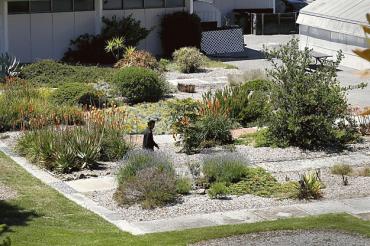 Can you say "Pave paradise to put up a parking lot" kids? Not just a song, it's happening all over the place. Here's today's Chron story on how San Mateo Community College students and neighbors are fighting back:
Suit filed to preserve College of San Mateo garden
Students and neighbors of the College of San Mateo who enjoy visiting a tangled campus garden sued the college district and its trustees in San Mateo County Superior Court on Friday in a last-ditch effort to save thousands of square feet of greenery from being turned into a parking lot.
Friends of the College of San Mateo Gardens, a loose-knit group that has fought the paving plan for months, say in their suit that San Mateo County Community College District trustees failed to perform a state-required environmental review before approving the plan last month.
"The district unlawfully approved a project with potentially significant environmental impacts without preparing" the report required by the California Environmental Quality Act, according to the complaint.
The project will result, the suit said, in the destruction of a "well-used, much-loved cultural landscape that now provides the only mature green area on campus conducive to reading and walking ... and support for wildlife." The garden was planted in 1963.
While district officials declined to comment on the suit's specifics, they defended the project, saying they intend to remove just 13,500 out of 50,000 square feet of garden.
"Our board believes the community college district has acted lawfully," said Richard Holober, president of the Board of Trustees.
Legal advice
Both an attorney and a consultant advised the district that a full environmental review was not required because the district wasn't proposing a new development, but only a modification of an existing project approved in 2006, said Barbara Christiansen, spokeswoman for the college district.
That original project called for preserving the garden, some greenhouses and Building 20, a 48-year-old structure housing a floristry program with just four students and a horticulture program that has been on hiatus for two years because of budget cuts.
College officials argue that Building 20 is no longer needed because new classrooms have been built elsewhere on campus. New labs and office space, along with a facility that can be rented to the public, require additional parking.
"As a result, the (college) administration decided that it would be best to demolish Building 20 and the associated green houses; construct approximately 125-200 parking spaces (replacing 30-40 spaces now there); and retain most of the garden area to be used by science classes," Christiansen wrote in a letter being sent out to anyone who expresses concern about the garden.
Case for full review
The students and neighbors suing the college district dispute that version of events in one key respect: They say the demolition project is not a modification, but a new project - one that ultimately will include the construction of an amphitheater - and therefore requires a full environmental review.
The group cites negative impacts of the project on wildlife habitat, water quality and campus aesthetics, and even cautions about the production of greenhouse gases.
In their lawsuit, the group says the college district also provided inadequate public notice of its intentions and asks the court to stop the project.
The suit also quotes an unnamed English instructor who wrote the college expressing appreciation for the garden.
The letter describes the doomed garden as "the only place left on campus where students, faculty, and staff can go to get away from the concrete and rigid plots of monoculture plantings that have taken over the campus."
It's a place "where we can enjoy nature's kindness, bounty, and wonder, relax, sit on the grass, and leisurely explore and experience its mini-climates and ecosystems so carefully nurtured over the past 40 years."
E-mail Nanette Asimov at nasimov@sfchronicle.com.
This article appeared on page C - 1 of the San Francisco Chronicle
Friday, June 03, 2011
Tree Dispute Mediation - A New Service of our Law Firm
Green Legal Solutions, the law office of Dotty LeMieux, is pleased to announce the addition to her property law practice the Mediation of Tree and Vegetation disputes.
Joining her is urban forester and consulting arborist Ray Moritz, well known throughout California for his forensic skills in analyzing tree failure, hazards, disease, view vista pruning and valuation for thorny legal cases. Moritz has been an expert witness in hundreds of cases involving tree and view disputes, tree damage trespass, wildland fires, property damage and wrongful death involving trees. He has also served as a neutral expert in mediations through the former Marin Community Mediation Service and participated in dozens of mediations for clients.
LeMieux specializes in litigation involving tree and view disputes, property and land use issues, as well as public interest environmental law emphasizing work upholding the California Environmental Quality Act. She has been trained in Dispute Resolution and Environmental Mediation as well as work in transactional analysis.
This unique new Tree Dispute Mediation service offers help to neighbors, insurance companies, public agencies and private companies before or during litigation for optimum results. A neutral evaluation of your tree issue, early in the process can save all parties time and money and result in a fair disposition of often prickly disputes involving neighbors and their trees.
Blog readers may post a comment or email me for more information. Or visit us on Facebook: https://www.facebook.com/pages/Tree-Dispute-Mediation-a-service-of-Green-Legal-Solutions/134208029947107
Tuesday, May 17, 2011
Environmental Review Needed on Massive AT&T Utility Box Project
Article in today's Beyond Chron:
Despite environmental concerns, AT&T is pushing its plans to install 726 refrigerator-size, sound-emitting utility boxes on city sidewalks. The massive installation will proceed unless the Board votes to require an environmental impact report (EIR). The vote, scheduled for Tuesday, May 24, is an affront to a strong coalition of community groups that believe an EIR is needed on this project.
Allowing AT&T to do what it wants with our public sidewalks without examining the effects on our environment is just plain wrong.
Using its influence at City Hall, AT&T sent its lobbyists to secure a blanket “categorical exemption” from an EIR. This EIR exemption allows AT&T to disregard any environmental impacts caused by the giant utility boxes that will litter our sidewalks. San Francisco Beautiful (SFB) and Planning Association for the Richmond (PAR) challenged that determination and filed an appeal with the Board of Supervisors. A growing number of community groups support the appeal to require an EIR.
Normally required of any large scale project, an EIR would produce objective and transparent analysis to measure the impact upon our neighborhoods.
At the same time, it should ensure good faith efforts are undertaken to mitigate or eliminate environmental impacts. An EIR should buttress enforcement of existing regulations that prevent the needless privatization of our public sidewalks.
The Board of Supervisors first heard the appeal last month. During five hours of testimony, AT&T told the full Board of Supervisors reasons it was either unable or unwilling to comply with City regulations that require their boxes to be primarily placed underground on private property.
AT&T is attempting to sidestep the more costly alternatives required under regulations signed by Mayor Ed Lee in 2005, when he was Director of the Department of Public Works. Those regulations state that, if not placed underground, utility boxes are to be placed on private property. This private-sector solution requires genuine, thorough efforts to contract property owners who are willing to lease space for Internet and cable equipment. These existing regulations state that street-level fixtures are a last resort only if the other two approaches prove technologically or economically infeasible.
In writing the 2005 regulations (and after extensive collaboration with San Francisco Beautiful, AT&T and others), Lee determined “…surface-mounted facilities in the public right-of-way will impede travel on public streets, inconvenience property owners, create visual blight, or otherwise incommode the use of the public rights-of-way by the public.” So, as a matter of City policy, utility boxes are blight.
AT&T’s 726 proposed utility boxes are four-feet high, over four-feet wide, and over two feet deep. They would be flanked by vertical posts to prevent damage by vehicles. And they emit noise, the steady sound of an electric toothbrush, says AT&T.
Already intrusive, the utility boxes will be permanent graffiti magnets, obstacles to the visually impaired, and hazards to opening passenger car doors. Property values are jeopardized since a utility box certainly detracts from the “curb appeal” of one’s house or commercial property.
Contrary to its ad slogan, AT&T seemingly refuses to “rethink possible.” An EIR would force the opposite, and indentify current, practical and equitable means to vastly reduce utility box blight. At the same time the City’s high-tech infrastructure would expand – all in environmentally responsible ways that are possible today.
Milo Hanke is a member of San Francisco Beautiful, a civic organization that seeks to maintain the city’s natural environment and history.
Allowing AT&T to do what it wants with our public sidewalks without examining the effects on our environment is just plain wrong.
Using its influence at City Hall, AT&T sent its lobbyists to secure a blanket “categorical exemption” from an EIR. This EIR exemption allows AT&T to disregard any environmental impacts caused by the giant utility boxes that will litter our sidewalks. San Francisco Beautiful (SFB) and Planning Association for the Richmond (PAR) challenged that determination and filed an appeal with the Board of Supervisors. A growing number of community groups support the appeal to require an EIR.
Normally required of any large scale project, an EIR would produce objective and transparent analysis to measure the impact upon our neighborhoods.
At the same time, it should ensure good faith efforts are undertaken to mitigate or eliminate environmental impacts. An EIR should buttress enforcement of existing regulations that prevent the needless privatization of our public sidewalks.
The Board of Supervisors first heard the appeal last month. During five hours of testimony, AT&T told the full Board of Supervisors reasons it was either unable or unwilling to comply with City regulations that require their boxes to be primarily placed underground on private property.
AT&T is attempting to sidestep the more costly alternatives required under regulations signed by Mayor Ed Lee in 2005, when he was Director of the Department of Public Works. Those regulations state that, if not placed underground, utility boxes are to be placed on private property. This private-sector solution requires genuine, thorough efforts to contract property owners who are willing to lease space for Internet and cable equipment. These existing regulations state that street-level fixtures are a last resort only if the other two approaches prove technologically or economically infeasible.
In writing the 2005 regulations (and after extensive collaboration with San Francisco Beautiful, AT&T and others), Lee determined “…surface-mounted facilities in the public right-of-way will impede travel on public streets, inconvenience property owners, create visual blight, or otherwise incommode the use of the public rights-of-way by the public.” So, as a matter of City policy, utility boxes are blight.
AT&T’s 726 proposed utility boxes are four-feet high, over four-feet wide, and over two feet deep. They would be flanked by vertical posts to prevent damage by vehicles. And they emit noise, the steady sound of an electric toothbrush, says AT&T.
Already intrusive, the utility boxes will be permanent graffiti magnets, obstacles to the visually impaired, and hazards to opening passenger car doors. Property values are jeopardized since a utility box certainly detracts from the “curb appeal” of one’s house or commercial property.
Contrary to its ad slogan, AT&T seemingly refuses to “rethink possible.” An EIR would force the opposite, and indentify current, practical and equitable means to vastly reduce utility box blight. At the same time the City’s high-tech infrastructure would expand – all in environmentally responsible ways that are possible today.
Milo Hanke is a member of San Francisco Beautiful, a civic organization that seeks to maintain the city’s natural environment and history.
Thursday, April 21, 2011
Hubby's on You Tube. Talking about the UCSF eucalyptus trees
See the You Tube video on the UCSF Eucalyptus management plan, featuring my hubby, consulting arborist extraordinaire, Ray Moritz. http://www.youtube.com/watch?v=KCUV8a22_QE&feature=search
Tuesday, April 12, 2011
What is "Green" Development?
Is there such a thing? Can you have a development that's truly green, and not primarily for the developer? Is it a non-profit project, or any old building that saves some open space, uses so-called green building materials and solar panels?
How about sustainable? What is that in the development context? Your answers awaited here.
How about sustainable? What is that in the development context? Your answers awaited here.
Thursday, March 10, 2011
Most popular questions for the Blog
Check out the section of this Blog on easements. It gets more questions from readers than any other, than all the others put together for that matter. What's up with that? Lots of landlocked people out there. Lots of neighbors don't want to share. Tell us your story. And check our Facebook page and like us: Green Legal Solutions
Subscribe to:
Posts (Atom)