A private outfit wants to privatize most of the use of Albert Park ballfield, a community field in San Rafael, mostly used by youth and amateur tams now, for a minor league Baseball team, that does not yet exist. They want heavy city subsidies, increased seating (more than double) concession stand, which serve alcohol, parking, loss of the amenity for most of the public use; and of course, the will charge admission, and pay minimal rent to the city.
All with no environmental review whatsoever. Nor economic analysis. At least Target had to do that. Sholdn't they have to go through at the very least the design review you must go through for any minor ome improvement projects? What's wrong with this picture.
Oh, and the capper, this outfit has no experience starting teams; its CEO is a travel and aviation expert. A Sonoma political operative is consultant, along with one guy who also consults with other teams. Where is heir business plan? Who will attend these games? ow much will they cost? How much is parking?
Lots of unanswered questions. Hearing on July 18, City Council chambers, San Rafael. Call, write to your council member today! Tell them you want an EIR and Economic Impact Report.

A newsletter on land use, tree law, property and boundary issues and general environmental topics. What's new in CEQA, neighbor law and beyond.
Wednesday, July 13, 2011


Monday, June 20, 2011
Friends of the Garden file suit in San Mateo
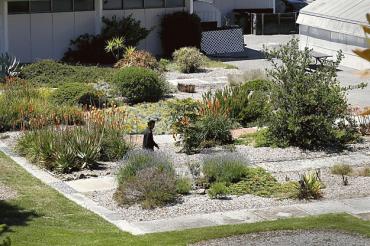 Can you say "Pave paradise to put up a parking lot" kids? Not just a song, it's happening all over the place. Here's today's Chron story on how San Mateo Community College students and neighbors are fighting back:
Suit filed to preserve College of San Mateo garden
Students and neighbors of the College of San Mateo who enjoy visiting a tangled campus garden sued the college district and its trustees in San Mateo County Superior Court on Friday in a last-ditch effort to save thousands of square feet of greenery from being turned into a parking lot.
Friends of the College of San Mateo Gardens, a loose-knit group that has fought the paving plan for months, say in their suit that San Mateo County Community College District trustees failed to perform a state-required environmental review before approving the plan last month.
"The district unlawfully approved a project with potentially significant environmental impacts without preparing" the report required by the California Environmental Quality Act, according to the complaint.
The project will result, the suit said, in the destruction of a "well-used, much-loved cultural landscape that now provides the only mature green area on campus conducive to reading and walking ... and support for wildlife." The garden was planted in 1963.
While district officials declined to comment on the suit's specifics, they defended the project, saying they intend to remove just 13,500 out of 50,000 square feet of garden.
"Our board believes the community college district has acted lawfully," said Richard Holober, president of the Board of Trustees.
Legal advice
Both an attorney and a consultant advised the district that a full environmental review was not required because the district wasn't proposing a new development, but only a modification of an existing project approved in 2006, said Barbara Christiansen, spokeswoman for the college district.
That original project called for preserving the garden, some greenhouses and Building 20, a 48-year-old structure housing a floristry program with just four students and a horticulture program that has been on hiatus for two years because of budget cuts.
College officials argue that Building 20 is no longer needed because new classrooms have been built elsewhere on campus. New labs and office space, along with a facility that can be rented to the public, require additional parking.
"As a result, the (college) administration decided that it would be best to demolish Building 20 and the associated green houses; construct approximately 125-200 parking spaces (replacing 30-40 spaces now there); and retain most of the garden area to be used by science classes," Christiansen wrote in a letter being sent out to anyone who expresses concern about the garden.
Case for full review
The students and neighbors suing the college district dispute that version of events in one key respect: They say the demolition project is not a modification, but a new project - one that ultimately will include the construction of an amphitheater - and therefore requires a full environmental review.
The group cites negative impacts of the project on wildlife habitat, water quality and campus aesthetics, and even cautions about the production of greenhouse gases.
In their lawsuit, the group says the college district also provided inadequate public notice of its intentions and asks the court to stop the project.
The suit also quotes an unnamed English instructor who wrote the college expressing appreciation for the garden.
The letter describes the doomed garden as "the only place left on campus where students, faculty, and staff can go to get away from the concrete and rigid plots of monoculture plantings that have taken over the campus."
It's a place "where we can enjoy nature's kindness, bounty, and wonder, relax, sit on the grass, and leisurely explore and experience its mini-climates and ecosystems so carefully nurtured over the past 40 years."
E-mail Nanette Asimov at nasimov@sfchronicle.com.
This article appeared on page C - 1 of the San Francisco Chronicle
Friday, June 03, 2011
Tree Dispute Mediation - A New Service of our Law Firm
Green Legal Solutions, the law office of Dotty LeMieux, is pleased to announce the addition to her property law practice the Mediation of Tree and Vegetation disputes.
Joining her is urban forester and consulting arborist Ray Moritz, well known throughout California for his forensic skills in analyzing tree failure, hazards, disease, view vista pruning and valuation for thorny legal cases. Moritz has been an expert witness in hundreds of cases involving tree and view disputes, tree damage trespass, wildland fires, property damage and wrongful death involving trees. He has also served as a neutral expert in mediations through the former Marin Community Mediation Service and participated in dozens of mediations for clients.
LeMieux specializes in litigation involving tree and view disputes, property and land use issues, as well as public interest environmental law emphasizing work upholding the California Environmental Quality Act. She has been trained in Dispute Resolution and Environmental Mediation as well as work in transactional analysis.
This unique new Tree Dispute Mediation service offers help to neighbors, insurance companies, public agencies and private companies before or during litigation for optimum results. A neutral evaluation of your tree issue, early in the process can save all parties time and money and result in a fair disposition of often prickly disputes involving neighbors and their trees.
Blog readers may post a comment or email me for more information. Or visit us on Facebook: https://www.facebook.com/pages/Tree-Dispute-Mediation-a-service-of-Green-Legal-Solutions/134208029947107
Tuesday, May 17, 2011
Environmental Review Needed on Massive AT&T Utility Box Project
Article in today's Beyond Chron:
Despite environmental concerns, AT&T is pushing its plans to install 726 refrigerator-size, sound-emitting utility boxes on city sidewalks. The massive installation will proceed unless the Board votes to require an environmental impact report (EIR). The vote, scheduled for Tuesday, May 24, is an affront to a strong coalition of community groups that believe an EIR is needed on this project.
Allowing AT&T to do what it wants with our public sidewalks without examining the effects on our environment is just plain wrong.
Using its influence at City Hall, AT&T sent its lobbyists to secure a blanket “categorical exemption” from an EIR. This EIR exemption allows AT&T to disregard any environmental impacts caused by the giant utility boxes that will litter our sidewalks. San Francisco Beautiful (SFB) and Planning Association for the Richmond (PAR) challenged that determination and filed an appeal with the Board of Supervisors. A growing number of community groups support the appeal to require an EIR.
Normally required of any large scale project, an EIR would produce objective and transparent analysis to measure the impact upon our neighborhoods.
At the same time, it should ensure good faith efforts are undertaken to mitigate or eliminate environmental impacts. An EIR should buttress enforcement of existing regulations that prevent the needless privatization of our public sidewalks.
The Board of Supervisors first heard the appeal last month. During five hours of testimony, AT&T told the full Board of Supervisors reasons it was either unable or unwilling to comply with City regulations that require their boxes to be primarily placed underground on private property.
AT&T is attempting to sidestep the more costly alternatives required under regulations signed by Mayor Ed Lee in 2005, when he was Director of the Department of Public Works. Those regulations state that, if not placed underground, utility boxes are to be placed on private property. This private-sector solution requires genuine, thorough efforts to contract property owners who are willing to lease space for Internet and cable equipment. These existing regulations state that street-level fixtures are a last resort only if the other two approaches prove technologically or economically infeasible.
In writing the 2005 regulations (and after extensive collaboration with San Francisco Beautiful, AT&T and others), Lee determined “…surface-mounted facilities in the public right-of-way will impede travel on public streets, inconvenience property owners, create visual blight, or otherwise incommode the use of the public rights-of-way by the public.” So, as a matter of City policy, utility boxes are blight.
AT&T’s 726 proposed utility boxes are four-feet high, over four-feet wide, and over two feet deep. They would be flanked by vertical posts to prevent damage by vehicles. And they emit noise, the steady sound of an electric toothbrush, says AT&T.
Already intrusive, the utility boxes will be permanent graffiti magnets, obstacles to the visually impaired, and hazards to opening passenger car doors. Property values are jeopardized since a utility box certainly detracts from the “curb appeal” of one’s house or commercial property.
Contrary to its ad slogan, AT&T seemingly refuses to “rethink possible.” An EIR would force the opposite, and indentify current, practical and equitable means to vastly reduce utility box blight. At the same time the City’s high-tech infrastructure would expand – all in environmentally responsible ways that are possible today.
Milo Hanke is a member of San Francisco Beautiful, a civic organization that seeks to maintain the city’s natural environment and history.
Allowing AT&T to do what it wants with our public sidewalks without examining the effects on our environment is just plain wrong.
Using its influence at City Hall, AT&T sent its lobbyists to secure a blanket “categorical exemption” from an EIR. This EIR exemption allows AT&T to disregard any environmental impacts caused by the giant utility boxes that will litter our sidewalks. San Francisco Beautiful (SFB) and Planning Association for the Richmond (PAR) challenged that determination and filed an appeal with the Board of Supervisors. A growing number of community groups support the appeal to require an EIR.
Normally required of any large scale project, an EIR would produce objective and transparent analysis to measure the impact upon our neighborhoods.
At the same time, it should ensure good faith efforts are undertaken to mitigate or eliminate environmental impacts. An EIR should buttress enforcement of existing regulations that prevent the needless privatization of our public sidewalks.
The Board of Supervisors first heard the appeal last month. During five hours of testimony, AT&T told the full Board of Supervisors reasons it was either unable or unwilling to comply with City regulations that require their boxes to be primarily placed underground on private property.
AT&T is attempting to sidestep the more costly alternatives required under regulations signed by Mayor Ed Lee in 2005, when he was Director of the Department of Public Works. Those regulations state that, if not placed underground, utility boxes are to be placed on private property. This private-sector solution requires genuine, thorough efforts to contract property owners who are willing to lease space for Internet and cable equipment. These existing regulations state that street-level fixtures are a last resort only if the other two approaches prove technologically or economically infeasible.
In writing the 2005 regulations (and after extensive collaboration with San Francisco Beautiful, AT&T and others), Lee determined “…surface-mounted facilities in the public right-of-way will impede travel on public streets, inconvenience property owners, create visual blight, or otherwise incommode the use of the public rights-of-way by the public.” So, as a matter of City policy, utility boxes are blight.
AT&T’s 726 proposed utility boxes are four-feet high, over four-feet wide, and over two feet deep. They would be flanked by vertical posts to prevent damage by vehicles. And they emit noise, the steady sound of an electric toothbrush, says AT&T.
Already intrusive, the utility boxes will be permanent graffiti magnets, obstacles to the visually impaired, and hazards to opening passenger car doors. Property values are jeopardized since a utility box certainly detracts from the “curb appeal” of one’s house or commercial property.
Contrary to its ad slogan, AT&T seemingly refuses to “rethink possible.” An EIR would force the opposite, and indentify current, practical and equitable means to vastly reduce utility box blight. At the same time the City’s high-tech infrastructure would expand – all in environmentally responsible ways that are possible today.
Milo Hanke is a member of San Francisco Beautiful, a civic organization that seeks to maintain the city’s natural environment and history.
Thursday, April 21, 2011
Hubby's on You Tube. Talking about the UCSF eucalyptus trees
See the You Tube video on the UCSF Eucalyptus management plan, featuring my hubby, consulting arborist extraordinaire, Ray Moritz. http://www.youtube.com/watch?v=KCUV8a22_QE&feature=search
Tuesday, April 12, 2011
What is "Green" Development?
Is there such a thing? Can you have a development that's truly green, and not primarily for the developer? Is it a non-profit project, or any old building that saves some open space, uses so-called green building materials and solar panels?
How about sustainable? What is that in the development context? Your answers awaited here.
How about sustainable? What is that in the development context? Your answers awaited here.
Thursday, March 10, 2011
Most popular questions for the Blog
Check out the section of this Blog on easements. It gets more questions from readers than any other, than all the others put together for that matter. What's up with that? Lots of landlocked people out there. Lots of neighbors don't want to share. Tell us your story. And check our Facebook page and like us: Green Legal Solutions
Sunday, December 12, 2010
Quarry approved in Sonoma County
Yet another article on a local bad deal for the environment and family farms; this one cries out from strong legal action. Thanks Shirlee Zane for standing up to the pressure; bad precedent is right. Giveaway of public resources perhaps?:
Roblar Road quarry debate not over
County gives tentative OK to substituting 105 acres of private land for habitat restoration
By BRETT WILKISON
THE PRESS DEMOCRAT
Published: Saturday, December 11, 2010 at 3:00 a.m.
PD File
John Barella.
The debate continues over the merits of a controversial land deal, tentatively approved Tuesday, involving publicly protected Sonoma County farmland.
Retiring Supervisors Mike Kerns and Paul Kelley, and board Chairwoman Valerie Brown, backed Roblar Road quarry developer John Barella's plan to use 105 acres of adjacent, taxpayer-protected private ranchland to replace rare amphibian habitat that will be lost when rock is extracted in his $60 million project.
The 3-2 vote, in which Supervisors Shirlee Zane and Efren Carrillo opposed the proposal, has fueled continued discussion over whether the deal provides public benefits and its policy implications for the county's 20-year-old Agricultural Preservation and Open Space District.
Supporters praised the board majority, saying they looked beyond the controversy surrounding the quarry and upheld the purpose of the open space district and its protection agreement on the 105 acres of farmland.
“The board dealt absolutely appropriately with the issue before them,” said former five-term county supervisor Tim Smith, who has worked for Barella. “The district is in the position to fulfill a couple of missions at the same time. Preservation of agriculture and preservation of natural resources. That focus tends to get lost when it's connected with a quarry.”
But critics said the decision sets a dangerous precedent by tampering with agreements intended to be permanent, known as conservation easements, and opening up district-protected lands for habitat requirements connected to a private development.
“Once you start fiddling with those easements, it's all downhill from there,” said Bill Kortum, a former county supervisor and Petaluma environmentalist who has served nearly three decades on the board of the Sonoma Land Trust.
The normally apolitical group also opposes the deal, which Kortum and others say could open the door to widescale private habitat mitigation on district-protected land.
In Barella's case, the deal could save him $5 million to $15 million — the cost of equivalent acreage or more pricey “habitat credits” he might otherwise have to buy — according to figures provided by mitigation experts.
Barella, who declined interview requests last week, has disputed those figures, saying he has land elsewhere in the county that might be suitable for mitigation.
Critics countered that an established principle in habitat mitigation is the addition of new protected lands. They said that step would not happen in the deal with Barella, though he has offered the district title to the 200-acre quarry property and an easement on his 244-acre Petaluma River ranch.
“The public has huge investments in buying these easements,” Kortum said. “Why should they further the lining of a developer's pocketbook?”
Speakers in Tuesday's packed public hearing represented viewpoints from both sides.
Kerns, who represents the south county area slated for the quarry, and Brown, the board chairwoman and swing vote Tuesday, framed the issue in both narrow and broad terms.
The property in question is a 388-acre rangeland parcel owned by Diamond W Dairy co-owners Ken and Clairette Wilson. The supervisors said carving out a piece for endangered California tiger salamander and threatened California red-legged frog habitat made good biological sense since the amphibians live on the adjacent quarry property.
They also disagreed with district staff and the advice of the County Counsel's Office and determined that any further farming restrictions on the Wilson property to protect habitat would be consistent with the current easement that protects agriculture.
Both also cast the issue in larger terms.
District-protected lands should be on the table when habitat mitigation is required of private or public developments, they said.
The public benefit of such deals comes in the additional habitat they provide for endangered species, they said.
Kerns went further, echoing quarry supporters who spoke Tuesday by saying such deals also enable developments — be it the widening of Highway 101, construction of the SMART rail line, or a quarry — that provide public benefit.
“Where are we to mitigate for that if county protected lands are not on the table?” he said. “This will allow certain types of development to go forward that otherwise might not be able to go forward.”
Both said such decisions should be made on a “case-by-case basis.” They also disagreed with critics that Tuesday's vote set any new precedent, or that it would undermine taxpayer and landowner support for the district.
“It's hard for me to believe that based on a decision to combine cattle and tiger salamander that, ‘Oh my gosh, I'm never going to support the open space district again,'” said Brown. “I think people are much more savvy than that.”
The two supervisors also echoed quarry supporters who said the issue wouldn't have garnered much attention if it hadn't been connected to the hotly disputed quarry project. It is set for formal approval Tuesday, along with the open space deal.
But critics, including land conservationists, dairy belt landowners and ag leaders, some of whom didn't take a stand on the quarry, said any instance of changing or reinterpreting conservation easements, which are designed as permanent documents, should set off alarm bells.
“If you allow modifications for a good cause, then the next step is maybe one that is not so good,” said former south county supervisor Jim Harberson, who was a leader in the open space district's formation.
“The public has a perception that ‘in perpetuity' means that (easements) are not open to reinterpretation by different boards of supervisors over time,” said Lex McCorvey, executive director of the Sonoma County Farm Bureau. The vote was a “head-scratcher” for the farming community, he said, because it relies on the “certainty” of such agreements.
“I'm not sure that the board gave us confidence in the integrity of the district's easement policies,” he said.
In the aftermath of last week's hearing, all sides have called for the open space district to resume work on a policy that could guide such decisions in the future. The district's citizens advisory committee, which unanimously opposed the deal, had called for postponement of Tuesday's vote to allow for a draft policy, shelved more than a year ago, to be completed.
Meanwhile, any final go-ahead for the deal will have to come from state and federal wildlife officials. Their input is not expected until Barella completes his formal application, which his biologist said wouldn't happen until spring.
The Tresch dairy family are also mulling their next move.
The family opposed the deal because a 368-acre piece of their rangeland adjacent to the Wilson property is covered by the same conservation easement. The Tresches say their farming operations on that land could be restricted without their consent to protect the rare frog and salamander habitat to be added to the Wilson property.
A legal challenge is not out of the question, Kathy Tresch said.
“We're still kind of in shock,” she said.
You can reach Staff Writer Brett Wilkison at 521-5295 or brett.wilkison@pressdemocrat.com.
Copyright © 2010 PressDemocrat.com — All rights reser
Roblar Road quarry debate not over
County gives tentative OK to substituting 105 acres of private land for habitat restoration
By BRETT WILKISON
THE PRESS DEMOCRAT
Published: Saturday, December 11, 2010 at 3:00 a.m.
PD File
John Barella.
The debate continues over the merits of a controversial land deal, tentatively approved Tuesday, involving publicly protected Sonoma County farmland.
Retiring Supervisors Mike Kerns and Paul Kelley, and board Chairwoman Valerie Brown, backed Roblar Road quarry developer John Barella's plan to use 105 acres of adjacent, taxpayer-protected private ranchland to replace rare amphibian habitat that will be lost when rock is extracted in his $60 million project.
The 3-2 vote, in which Supervisors Shirlee Zane and Efren Carrillo opposed the proposal, has fueled continued discussion over whether the deal provides public benefits and its policy implications for the county's 20-year-old Agricultural Preservation and Open Space District.
Supporters praised the board majority, saying they looked beyond the controversy surrounding the quarry and upheld the purpose of the open space district and its protection agreement on the 105 acres of farmland.
“The board dealt absolutely appropriately with the issue before them,” said former five-term county supervisor Tim Smith, who has worked for Barella. “The district is in the position to fulfill a couple of missions at the same time. Preservation of agriculture and preservation of natural resources. That focus tends to get lost when it's connected with a quarry.”
But critics said the decision sets a dangerous precedent by tampering with agreements intended to be permanent, known as conservation easements, and opening up district-protected lands for habitat requirements connected to a private development.
“Once you start fiddling with those easements, it's all downhill from there,” said Bill Kortum, a former county supervisor and Petaluma environmentalist who has served nearly three decades on the board of the Sonoma Land Trust.
The normally apolitical group also opposes the deal, which Kortum and others say could open the door to widescale private habitat mitigation on district-protected land.
In Barella's case, the deal could save him $5 million to $15 million — the cost of equivalent acreage or more pricey “habitat credits” he might otherwise have to buy — according to figures provided by mitigation experts.
Barella, who declined interview requests last week, has disputed those figures, saying he has land elsewhere in the county that might be suitable for mitigation.
Critics countered that an established principle in habitat mitigation is the addition of new protected lands. They said that step would not happen in the deal with Barella, though he has offered the district title to the 200-acre quarry property and an easement on his 244-acre Petaluma River ranch.
“The public has huge investments in buying these easements,” Kortum said. “Why should they further the lining of a developer's pocketbook?”
Speakers in Tuesday's packed public hearing represented viewpoints from both sides.
Kerns, who represents the south county area slated for the quarry, and Brown, the board chairwoman and swing vote Tuesday, framed the issue in both narrow and broad terms.
The property in question is a 388-acre rangeland parcel owned by Diamond W Dairy co-owners Ken and Clairette Wilson. The supervisors said carving out a piece for endangered California tiger salamander and threatened California red-legged frog habitat made good biological sense since the amphibians live on the adjacent quarry property.
They also disagreed with district staff and the advice of the County Counsel's Office and determined that any further farming restrictions on the Wilson property to protect habitat would be consistent with the current easement that protects agriculture.
Both also cast the issue in larger terms.
District-protected lands should be on the table when habitat mitigation is required of private or public developments, they said.
The public benefit of such deals comes in the additional habitat they provide for endangered species, they said.
Kerns went further, echoing quarry supporters who spoke Tuesday by saying such deals also enable developments — be it the widening of Highway 101, construction of the SMART rail line, or a quarry — that provide public benefit.
“Where are we to mitigate for that if county protected lands are not on the table?” he said. “This will allow certain types of development to go forward that otherwise might not be able to go forward.”
Both said such decisions should be made on a “case-by-case basis.” They also disagreed with critics that Tuesday's vote set any new precedent, or that it would undermine taxpayer and landowner support for the district.
“It's hard for me to believe that based on a decision to combine cattle and tiger salamander that, ‘Oh my gosh, I'm never going to support the open space district again,'” said Brown. “I think people are much more savvy than that.”
The two supervisors also echoed quarry supporters who said the issue wouldn't have garnered much attention if it hadn't been connected to the hotly disputed quarry project. It is set for formal approval Tuesday, along with the open space deal.
But critics, including land conservationists, dairy belt landowners and ag leaders, some of whom didn't take a stand on the quarry, said any instance of changing or reinterpreting conservation easements, which are designed as permanent documents, should set off alarm bells.
“If you allow modifications for a good cause, then the next step is maybe one that is not so good,” said former south county supervisor Jim Harberson, who was a leader in the open space district's formation.
“The public has a perception that ‘in perpetuity' means that (easements) are not open to reinterpretation by different boards of supervisors over time,” said Lex McCorvey, executive director of the Sonoma County Farm Bureau. The vote was a “head-scratcher” for the farming community, he said, because it relies on the “certainty” of such agreements.
“I'm not sure that the board gave us confidence in the integrity of the district's easement policies,” he said.
In the aftermath of last week's hearing, all sides have called for the open space district to resume work on a policy that could guide such decisions in the future. The district's citizens advisory committee, which unanimously opposed the deal, had called for postponement of Tuesday's vote to allow for a draft policy, shelved more than a year ago, to be completed.
Meanwhile, any final go-ahead for the deal will have to come from state and federal wildlife officials. Their input is not expected until Barella completes his formal application, which his biologist said wouldn't happen until spring.
The Tresch dairy family are also mulling their next move.
The family opposed the deal because a 368-acre piece of their rangeland adjacent to the Wilson property is covered by the same conservation easement. The Tresches say their farming operations on that land could be restricted without their consent to protect the rare frog and salamander habitat to be added to the Wilson property.
A legal challenge is not out of the question, Kathy Tresch said.
“We're still kind of in shock,” she said.
You can reach Staff Writer Brett Wilkison at 521-5295 or brett.wilkison@pressdemocrat.com.
Copyright © 2010 PressDemocrat.com — All rights reser
Monday, November 22, 2010
Train vs. Tree in Palo Alto
Read this interesting article on Tree vs. Train in today's Bay Citizen
By Doug Ray, Peninsula Press on November 19, 2010 - 3:29 p.m. PST
Towering 10 stories above the banks of San Francisquito Creek, the El Palo Alto redwood predates the U.S. Constitution by more than 800 years. It is widely believed to have been a campsite for explorer Gaspar de Portola when he discovered San Francisco Bay in 1769.
It has endured everything from ecological changes to economic shifts, all of which left marks on the ecology of this venerable tree. Now it’s entangled in the debate over high-speed rail.
The tree stands within 10 feet of existing Caltrain tracks between the Menlo Park and Palo Alto stations, with commuter trains passing by 90 times every weekday. Initial plans by the California High-Speed Rail Authority called for widening the tracks to accommodate the new rail line, which would put the tree in jeopardy. Proposed alternatives included a trench or raised track.
To be sure, critics cite many reasons for their opposition, including the costs. But in Palo Alto and neighboring communities, the tree has become a budding symbol for why high-speed rail — approved by a majority of the state’s voters in 2008 — needs to be evaluated carefully. Dave Dockter, Palo Alto city arborist and current steward of the tree, said, “I think all of the alternatives have a potentially significant and catastrophic potential to impact the El Palo Alto redwood.”
For example, he said, relocating the train tracks could disrupt the tree’s root system.
“The environmental review information [submitted by the city of Palo Alto] has already stated that the placement of any alternatives must be addressed to protect the root plate to prevent catastrophic toppling of the entire tree,” Dockter said. “I think that is one of the first issues that need to be resolved and discussed before the High-Speed Rail Authority can even make it to first base in creating minimal impact to this tree.”
High-Speed Rail Authority officials emphasized that protecting important historical and environmental treasures is a priority. Spokeswoman Rachel Wall said the authority is completing a series of environmental reviews, each addressing increasingly localized concerns.
“There was the broad, program-level [Environmental Impact Report] for the Bay Area, for the Central Valley and for the state,” she said. “Those are really the big, overarching, program-level environmental certifications that we did back in ’05 and then in ’07 and in ’08. What we’re doing now is project level work where it’s more specific and it’s broken down by the 10 segments in the project.”
The initial Environmental Impact Report briefly mentioned the El Palo Alto redwood as a key historic resource but did not get into details about ways to protect it. The report did address how the high-speed rail project would affect El Palo Alto visually, calling the impact minimal because the tree dominates the landscape.
In a recent interview, Wall said, “I know that the Caltrain right-of-way is very close to that tree. I’ve heard you can reach out and touch it, essentially. But certainly our project will avoid, minimize or mitigate that impact wherever possible … in all likelihood, avoiding it, because it’s such a historical resource for our state.”
El Palo Alto is a coast redwood, a species best known for producing some of the tallest and oldest trees on Earth. Some redwoods have grown as tall as 30- or 40-story buildings and have lived for more than 3,000 years. Redwoods have long been a symbol of the conservation and environmental movement, influencing, most notably, Sierra Club founder John Muir.
Ruskin Hartley, executive director of the Save the Redwoods League, said, “If I look at the whole sweep of conservation efforts, I would argue, to a large degree, they started with the redwoods. In 1864, one of the first conservation acts, protection acts, was the Federal Government setting aside the Mariposa Grove of giant sequoias and the Yosemite Valley for protection. Redwoods themselves have inspired protection acts going back at least 150 years.”
Coast redwoods are rare trees, found sporadically along the Northern California and southern Oregon coast. They are considered a vulnerable species by the International Union for Conservation of Nature. “In the last 150 years, more than 95 percent of the ancient coast redwood forests have been logged,” Hartley said. “Today, anywhere that we find ancient monarch trees that are a relic of the past is a place we need to work to protect.”
Among redwoods, El Palo Alto itself is an anomaly. Very few coast redwoods are found naturally this far into the valley and even fewer are as old or tall as El Palo Alto. El Palo Alto is estimated to have stood on the banks of San Francisquito Creek for 1070 years.
Yet, Dockter pointed out, “It is only been in the last century that mankind has had an effect on the tree, which are manifold. Many, many effects have influenced the tree both above-ground and below-ground. Incidentally, there are other conditions that are even beyond the railroad’s effect on the tree, and one is just our human culture has actually altered the water table in the Santa Clara Valley, which I believe had a dramatic effect on the health of El Palo Alto.”
Early photographs show that El Palo Alto once had two trunks. The widely held belief is that one trunk was washed away in a storm in the 1880s. Dockter is not so convinced. “There’s another controversial thought that maybe the tree came out of necessity for the previous wooden trestle to be put in. There is no record of the actual event that took that second spar out, whether it was a storm or whether it was actually Southern Pacific Railroad crews that could have taken it out on a weekend or something and it just didn’t get reported in the local media,” he said.
The tree is an important symbol for the Peninsula region. It is featured on the seals of Stanford University and the City of Palo Alto. An anthropomorphized version of El Palo Alto has served as the unofficial mascot for Stanford athletic teams since the early 1980s and has even been featured in a commercial for ESPN’s Sports Center.
Trains have impacted the tree’s health for the past century and a half. Until the advent of diesel in the middle of the 20th-century, trains powered by the combustion of wood and coal would storm past the tree, leaving layers of soot that would effectively suffocate it in layers of carbon. Dockter noted, “The first carbon footprint impact was to the El Palo Alto redwood from smoke, actually.”
El Palo Alto is a symbol of survival. As Hartley put it, “I think what this story shows is just how resilient these trees can be if we don’t cut them down. That tree has had just about everything thrown at it with the exception of a saw; its top has died back, and its lost limbs and its lost a trunk, but the tree is still there.”
By Doug Ray, Peninsula Press on November 19, 2010 - 3:29 p.m. PST
Towering 10 stories above the banks of San Francisquito Creek, the El Palo Alto redwood predates the U.S. Constitution by more than 800 years. It is widely believed to have been a campsite for explorer Gaspar de Portola when he discovered San Francisco Bay in 1769.
It has endured everything from ecological changes to economic shifts, all of which left marks on the ecology of this venerable tree. Now it’s entangled in the debate over high-speed rail.
The tree stands within 10 feet of existing Caltrain tracks between the Menlo Park and Palo Alto stations, with commuter trains passing by 90 times every weekday. Initial plans by the California High-Speed Rail Authority called for widening the tracks to accommodate the new rail line, which would put the tree in jeopardy. Proposed alternatives included a trench or raised track.
To be sure, critics cite many reasons for their opposition, including the costs. But in Palo Alto and neighboring communities, the tree has become a budding symbol for why high-speed rail — approved by a majority of the state’s voters in 2008 — needs to be evaluated carefully. Dave Dockter, Palo Alto city arborist and current steward of the tree, said, “I think all of the alternatives have a potentially significant and catastrophic potential to impact the El Palo Alto redwood.”
For example, he said, relocating the train tracks could disrupt the tree’s root system.
“The environmental review information [submitted by the city of Palo Alto] has already stated that the placement of any alternatives must be addressed to protect the root plate to prevent catastrophic toppling of the entire tree,” Dockter said. “I think that is one of the first issues that need to be resolved and discussed before the High-Speed Rail Authority can even make it to first base in creating minimal impact to this tree.”
High-Speed Rail Authority officials emphasized that protecting important historical and environmental treasures is a priority. Spokeswoman Rachel Wall said the authority is completing a series of environmental reviews, each addressing increasingly localized concerns.
“There was the broad, program-level [Environmental Impact Report] for the Bay Area, for the Central Valley and for the state,” she said. “Those are really the big, overarching, program-level environmental certifications that we did back in ’05 and then in ’07 and in ’08. What we’re doing now is project level work where it’s more specific and it’s broken down by the 10 segments in the project.”
The initial Environmental Impact Report briefly mentioned the El Palo Alto redwood as a key historic resource but did not get into details about ways to protect it. The report did address how the high-speed rail project would affect El Palo Alto visually, calling the impact minimal because the tree dominates the landscape.
In a recent interview, Wall said, “I know that the Caltrain right-of-way is very close to that tree. I’ve heard you can reach out and touch it, essentially. But certainly our project will avoid, minimize or mitigate that impact wherever possible … in all likelihood, avoiding it, because it’s such a historical resource for our state.”
El Palo Alto is a coast redwood, a species best known for producing some of the tallest and oldest trees on Earth. Some redwoods have grown as tall as 30- or 40-story buildings and have lived for more than 3,000 years. Redwoods have long been a symbol of the conservation and environmental movement, influencing, most notably, Sierra Club founder John Muir.
Ruskin Hartley, executive director of the Save the Redwoods League, said, “If I look at the whole sweep of conservation efforts, I would argue, to a large degree, they started with the redwoods. In 1864, one of the first conservation acts, protection acts, was the Federal Government setting aside the Mariposa Grove of giant sequoias and the Yosemite Valley for protection. Redwoods themselves have inspired protection acts going back at least 150 years.”
Coast redwoods are rare trees, found sporadically along the Northern California and southern Oregon coast. They are considered a vulnerable species by the International Union for Conservation of Nature. “In the last 150 years, more than 95 percent of the ancient coast redwood forests have been logged,” Hartley said. “Today, anywhere that we find ancient monarch trees that are a relic of the past is a place we need to work to protect.”
Among redwoods, El Palo Alto itself is an anomaly. Very few coast redwoods are found naturally this far into the valley and even fewer are as old or tall as El Palo Alto. El Palo Alto is estimated to have stood on the banks of San Francisquito Creek for 1070 years.
Yet, Dockter pointed out, “It is only been in the last century that mankind has had an effect on the tree, which are manifold. Many, many effects have influenced the tree both above-ground and below-ground. Incidentally, there are other conditions that are even beyond the railroad’s effect on the tree, and one is just our human culture has actually altered the water table in the Santa Clara Valley, which I believe had a dramatic effect on the health of El Palo Alto.”
Early photographs show that El Palo Alto once had two trunks. The widely held belief is that one trunk was washed away in a storm in the 1880s. Dockter is not so convinced. “There’s another controversial thought that maybe the tree came out of necessity for the previous wooden trestle to be put in. There is no record of the actual event that took that second spar out, whether it was a storm or whether it was actually Southern Pacific Railroad crews that could have taken it out on a weekend or something and it just didn’t get reported in the local media,” he said.
The tree is an important symbol for the Peninsula region. It is featured on the seals of Stanford University and the City of Palo Alto. An anthropomorphized version of El Palo Alto has served as the unofficial mascot for Stanford athletic teams since the early 1980s and has even been featured in a commercial for ESPN’s Sports Center.
Trains have impacted the tree’s health for the past century and a half. Until the advent of diesel in the middle of the 20th-century, trains powered by the combustion of wood and coal would storm past the tree, leaving layers of soot that would effectively suffocate it in layers of carbon. Dockter noted, “The first carbon footprint impact was to the El Palo Alto redwood from smoke, actually.”
El Palo Alto is a symbol of survival. As Hartley put it, “I think what this story shows is just how resilient these trees can be if we don’t cut them down. That tree has had just about everything thrown at it with the exception of a saw; its top has died back, and its lost limbs and its lost a trunk, but the tree is still there.”
Wednesday, October 27, 2010
Seattle - the Emerald City - Relaxes its Tree Protections

Is this the beginning of a trend? Read on:
SEATTLE -- Towering Douglas Firs and lush urban parks helped earned Seattle the nickname Emerald City, so it's not surprising that felling a tree can prompt heated responses.
A judge was fined $500,000 for cutting down more than 120 cherry and maple trees in a city park for better views, and residents fought for years to save a mature grove of 100 Douglas firs from being cleared for development.
Tree lovers are now fighting proposed city rules that would remove current protections for large, exceptional trees, and do not include a requirement that property owners get a permit to remove a tree.
"We're the Emerald City because of the trees," said Cass Turnbull, founder of PlantAmnesty, a Seattle-based nonprofit, who favors a permit system as a way to slow down tree-cutting and give people pause. "Trees grow here very easily so we tend to take them for granted."
The proposed tree regulations come at a time when the city is trying to expand its tree canopy to 30 percent by 2037, and a city audit last year called for improvements in the city's stewardship of trees. Seattle's tree coverage shrank from 40 percent in 1972 to about 23 percent in 2007.
AP Photo - Kimberly Christensen climbs several feet off the ground and atop a massive branch on a silk tree, newly-designated as an "exceptional tree," in front of her home Wednesday, Oct. 13, 2010, in Seattle. The specimen, also known as a mimosa tree, is estimated at over 50 years old. The latest target of community rage among tree lovers in Seattle are proposed rules that, among other things, would no longer require residents to get a permit to fell a tree on their property.
The city council passed interim tree rules last year and directed city planners to come up with new private-tree regulations, now out for public review. The city council isn't likely to take up the issue until next year.
Many communities, such as Kirkland, Wash., and Miami-Dade County, have a tree-removal permit system. Some, like Atlanta, require property owners to pay to replace every tree they remove that's not hazardous and more than 6 inches in diameter.
Brennon Staley, who is managing Seattle's regulations update, said the city weighed the pros and cons of a permit system, and decided it is too difficult to enforce, is ineffective and creates a burden for property owners. The city, instead, would require developers of new or replaced homes to get a certain number of tree credits by planting or retaining trees, among other proposed rules.
The city's newly appointed Urban Forestry Commission is also pushing for a permit system.
Josh Robinette, 32, a Seattle machinist, doesn't agree.
"Personally, I think if it's your private property, within limits, you should be able to do what you want," said Robinette. "If you have a tree that you don't want, or it's diseased, you should be able to cut it down without a permit."
Last year Robinette said he was fined $22,500 for cutting down a massive diseased Douglas fir in his front yard. He appealed - and won - arguing he was given wrong information from city workers.
Garrett Huffman, Seattle manager for the Master Builders Association of King and Snohomish Counties, said the existing protections for exceptional trees have hampered development and he is glad it's not included in the proposed rules.
The city has decided it wants urban growth, but "the battle right now is every single tree and it's inefficient," he said. "The city needs to decide whether it's a city of density with trees, or it's an urban forest that happens to have some people living in it."
Turnbull and others believe if people knew the monetary value of their trees, or got incentives like a utility credit for planting them, they'd do more to preserve them.
Researchers are currently trying to calculate what Seattle's trees are worth, in terms of water saved, pollution reduced, stormwater and drainage costs saved. The project involves the nonprofit Cascade Land Conservancy, the U.S. Forest Service, the University of Washington, Seattle and King County.
"Most people don't think about it," said Kathleen Wolf, a UW social scientist working on the project. "This helps in a very public way, what are the values of those trees?"
Trees have long been appreciated for their beauty and environmental value, but there's increasing recognition of their social, psychological and economic benefits as well.
"Planting and preserving trees is the cheapest and easiest way to assist in managing stormwater," said Charles Ray, urban forester for Vancouver, Wash., which requires developers of new homes to retain a certain tree density on site.
A tree's branches and leaves slow rainwater runoff, improves drainage and filters the grease, heavy metals and other pollutants that wash into waterways. Trees also reduce energy use by providing shade.
Kimberly Christensen, 38, said the presence of a magnificent mimosa tree in front of her Seattle home has shifted her thinking about trees and its value.
"I used to think, 'We own the house we can landscape it how we want to,'" said Christensen, who recently celebrated the mimosa's inclusion in the city's Heritage Tree program. "We've only recently started to think about the urban forests, and the good things that the trees can provide for our community."
Read more: http://www.fresnobee.com/2010/10/24/2130300/seattles-proposed-tree-rules-prompt.html#ixzz13ZiGDx00
Tuesday, August 17, 2010
Cut Down NOT thy Neighbor's Tree
An article in a recent IJ (View vandal trashes trees at McNears Beach Park, August 14, 2010) discusses a common problem in the Bay area: the conflict between trees and views. So common are acts of chopping, poisoning, root cutting, topping and other damages of one neighbors’ trees by another, that there ought to be an eleventh commandment written just for Marin: “Thou shalt not destroy thy neighbor’s tree.”
These offenses are not confined to Marin, but anywhere trees and views collide.
Nor are they confined to private property, as the IJ story attests. The “view vandal” in the IJ story may have been someone in the nearby Marin Bay Park development. In fact, states the article, police have narrowed their focus to one home, which to all appearances is the one most directly benefiting from the tree cutting. Check the line of sight, and you often can find the culprit in these cases.
One of my earliest cases as a lawyer in Marin involved trees cut in a state park by a neighbor who was told that “everybody does it,” and whoops, he got caught. Luckily for him, he wangled a civil compromise (restitution) instead of doing jail time.
This sort of “self help” most often takes place between neighbors. The conflict may simmer for years; trees grow taller; views get smaller; tempers get shorter. The next thing you know, the chain saws are out.
You may get your view that way, but it’s also a good way to lose a bundle in a nasty lawsuit, as well as any good will with your neighbors. Trees have value, often in the thousands of dollars, and, because of the uniqueness of trees and the personal violation their destruction represents, damages for deliberate cutting can be tripled by a court.
By the time the neighbors are facing each other across a conference table in a high priced lawyer’s office, there’s often more than hurt feelings and dead timber involved. Try to nip tree disputes in the bud.
Talk to your neighbor. Tree blocking your view, or maybe dropping sticky sap all over the family sedan? Make sure the neighbor is aware of the problem, and offer to help pay for trimming or removal and replacement with a more appropriate (and lower growing species.)
Does your town have a tree committee and a procedure in place for resolving disputes before litigation? If so, use it; it’s a prerequisite for going to court in municipalities with a tree and view ordinance. In Marin, that’s Tiburon, Belvedere, Sausalito and Corte Madera.
If there’s no such ordinance, try mediation before either self help or litigation. There are many attorneys, retired judges and even trained lay people offering mediation. Each party usually pays half the cost, and you both must be willing to see the other’s point of view. But remember this: if you end up in court, the judge is going to strongly urge mediation anyway, and by that time, positions may be set in stone, and small fortunes spent in attorneys’ fees and costs. Mediate early before things escalate.
If you must sue your neighbor, be realistic. Get an expert tree appraisal from a consulting arborist first. If damages are less than $7500, try Small Claims Court.
Losing your trees is a traumatic experience for anyone, especially when they are lovingly grown and tended over the years, shelter song birds, and provide the privacy of a leafy arbor over your neighbor’s yard. Think of that when you fume about the loss of a view. Talk to the neighbor over tea or a glass of good pinot grigio and try to work out a compromise that you both can live with before it’s too late.
Dotty E. LeMieux
Dotty E. LeMieux is an attorney in San Rafael specializing in tree and property disputes and general environmental law and mediation involving tree issues.
These offenses are not confined to Marin, but anywhere trees and views collide.
Nor are they confined to private property, as the IJ story attests. The “view vandal” in the IJ story may have been someone in the nearby Marin Bay Park development. In fact, states the article, police have narrowed their focus to one home, which to all appearances is the one most directly benefiting from the tree cutting. Check the line of sight, and you often can find the culprit in these cases.
One of my earliest cases as a lawyer in Marin involved trees cut in a state park by a neighbor who was told that “everybody does it,” and whoops, he got caught. Luckily for him, he wangled a civil compromise (restitution) instead of doing jail time.
This sort of “self help” most often takes place between neighbors. The conflict may simmer for years; trees grow taller; views get smaller; tempers get shorter. The next thing you know, the chain saws are out.
You may get your view that way, but it’s also a good way to lose a bundle in a nasty lawsuit, as well as any good will with your neighbors. Trees have value, often in the thousands of dollars, and, because of the uniqueness of trees and the personal violation their destruction represents, damages for deliberate cutting can be tripled by a court.
By the time the neighbors are facing each other across a conference table in a high priced lawyer’s office, there’s often more than hurt feelings and dead timber involved. Try to nip tree disputes in the bud.
Talk to your neighbor. Tree blocking your view, or maybe dropping sticky sap all over the family sedan? Make sure the neighbor is aware of the problem, and offer to help pay for trimming or removal and replacement with a more appropriate (and lower growing species.)
Does your town have a tree committee and a procedure in place for resolving disputes before litigation? If so, use it; it’s a prerequisite for going to court in municipalities with a tree and view ordinance. In Marin, that’s Tiburon, Belvedere, Sausalito and Corte Madera.
If there’s no such ordinance, try mediation before either self help or litigation. There are many attorneys, retired judges and even trained lay people offering mediation. Each party usually pays half the cost, and you both must be willing to see the other’s point of view. But remember this: if you end up in court, the judge is going to strongly urge mediation anyway, and by that time, positions may be set in stone, and small fortunes spent in attorneys’ fees and costs. Mediate early before things escalate.
If you must sue your neighbor, be realistic. Get an expert tree appraisal from a consulting arborist first. If damages are less than $7500, try Small Claims Court.
Losing your trees is a traumatic experience for anyone, especially when they are lovingly grown and tended over the years, shelter song birds, and provide the privacy of a leafy arbor over your neighbor’s yard. Think of that when you fume about the loss of a view. Talk to the neighbor over tea or a glass of good pinot grigio and try to work out a compromise that you both can live with before it’s too late.
Dotty E. LeMieux
Dotty E. LeMieux is an attorney in San Rafael specializing in tree and property disputes and general environmental law and mediation involving tree issues.
Friday, April 30, 2010
Eucalyptus Trees head for the Supreme Court

Here's an article from the Marin IJ about the case I last wrote about, a Larkspur woman fighting her neighbors over some nasty Eucalyptus trees. Husband, Ray Moritz, is the arborist for the neighbors. The tree owner vows to take her case to the Supreme Court now that the Court of Appeals said take down the trees.
Mark Prado
Posted: 04/27/2010 05:40:57 PM PDT
Neighbors say the 28 eucalyptus trees on Anne Wolff s Larkspur property pose a threat to their homes, and so far, judges agree. (IJ photo/Jeff Vendsel)
A Larkspur woman is vowing to take her case to the California Supreme Court after an appellate court sided with a Marin judge's ruling that she chop down more than two dozen of her eucalyptus trees.
The grove of massive trees took center stage in a trial last year pitting neighbor against neighbor over the touchy subjects of property rights, safety and civility.
Last April, Dr. Anne Wolff was ordered to cut down 28 of her 45 blue gum eucalyptus trees at her Bayview Avenue home in the Palm Hill neighborhood because they were a "clear and continuing hazard," according to a ruling issued by former Marin Superior Court Judge Michael Dufficy.
The 1st District Court of Appeal in San Francisco affirmed Dufficy's decision in a preliminary ruling that will become official on Thursday. Wolff has 10 days to determine if she will appeal to the state's top court, but she said she already has made up her mind.
"We are taking it to the state Supreme Court," Wolff said Tuesday.
There is no guarantee the court will hear the case, but Wolff's attorney, Michael J. Coffino, said important legal issues are at stake.
"The case addresses the standard by which property owners should be held accountable in their ability to control Mother Nature," he said. "If every property owner is responsible for the vagaries of Mother Nature, we have gone down a dangerous slippery slope."
Sausalito attorney Barri K. Bonapart, who represented Wolff's neighbors who were concerned the trees or
Advertisement
their limbs could fall on them, said the appellate decision was correct.
"These trees are nothing to mess around with," she said, adding she didn't believe the state Supreme Court would hear the case. "Eucalyptus trees are very dense. Their limbs can weigh as much as an SUV, 3,000 or 4,000 pounds."
She added that her clients "will be relieved once the trees are taken down."
The appellate court said: "While uncertainty of future harm by itself is not sufficient to obtain an injunction against a nuisance, a reasonable probability of significant harm is. Here, substantial evidence supports the conclusion of a reasonable probability of future harm from failing branches and fire."
Neighbors Michael and Joni Mindel and Catherine and Lawrence Way filed the original suit against Wolff, saying the trees, some of which are more than 100 feet tall, pose a safety threat.
"The fact of the matter is that after 14 years there has not been one cent of damage to the Ways' or Mindels' homes," Wolff said.
During storms the Mindels, who also live on Bayview Avenue, have slept in different parts of their house because they were concerned about damage from a falling tree, and they have even left the home entirely, according to court documents.
They were so concerned that 10 years ago they offered Wolff $50,000 to remove the eucalyptus trees and replant other species in her yard. Wolff, who purchased the property in 1994 - before the plaintiffs moved to the neighborhood - declined.
The Ways, who live on Elm Avenue, have had sleepless nights and have formulated evacuation plans in case a tree or heavy limb hits their home, according to court records.
During the trial Bonapart said her clients were "terrified" by the prospect of damage caused by the trees, and Larkspur fire officials deemed them a fire hazard.
In his ruling, Dufficy cited the plaintiffs' arborist's report, which identified 28 trees in danger of falling on the neighbors' property. While the Dufficy ruling favored the plaintiffs, it also required all parties to split the cost of removing the trees, estimated to be in excess of $50,000.
Subscribe to:
Posts (Atom)